


Discover the Gargano Peninsula
The Gargano Peninsula is one of the most diverse and captivating regions of Southern Italy – a place where white-cliff beaches, ancient forests, historic hilltowns and spiritual landmarks come together. Erasmus trainees coming to our organisation have the opportunity to explore several of these remarkable locations. Excursions are organised depending on the length of the stay, the season and weather conditions, giving participants an authentic cultural experience of the Gargano.


Vieste - The Pearl
of Gargano
Vieste is one of the most iconic towns on the Gargano Peninsula, known for its white old town perched above the Adriatic Sea, dramatic cliffs, and crystal-clear waters. Narrow streets, stone stairways, and sea views create a unique Mediterranean atmosphere that blends history with everyday Italian life.
For Erasmus+ participants, Vieste offers the perfect balance between cultural discovery and relaxation. The town is famous for its long sandy beaches, sea caves, and boat trips along the coastline, as well as its lively cafés, local cuisine, and welcoming southern Italian spirit. It is an ideal destination for day trips, learning about local traditions, and experiencing the natural beauty of southern Italy.
Baia delle Zagare
& Vignanotica
Baia delle Zagare and Vignanotica are among the most iconic beaches of the Gargano coast, famous for their dramatic white limestone cliffs, turquoise waters, and striking sea stacks rising from the Adriatic Sea. Surrounded by unspoiled nature and pine forests, these beaches offer a powerful contrast between wild landscapes and crystal-clear calm waters.
For Erasmus+ participants, this area is a perfect escape for relaxation, reflection, and connection with nature. Whether it’s swimming, walking along the shore, or simply enjoying the view, Baia delle Zagare and Vignanotica provide a memorable experience of southern Italy’s natural beauty—authentic, peaceful, and deeply inspiring.


Monte Sant’Angelo
UNESCO sanctuary
Monte Sant’Angelo is a historic mountain town located in the heart of the Gargano Peninsula and home to the Sanctuary of Saint Michael the Archangel, a UNESCO World Heritage Site. For centuries, this sacred place has attracted pilgrims from all over Europe and remains one of the most important spiritual landmarks in Southern Italy.
Beyond its religious significance, Monte Sant’Angelo offers a unique cultural experience: a well-preserved medieval old town, narrow stone streets, white houses, traditional craft shops, and breathtaking views over the Adriatic Sea. Visiting Monte Sant’Angelo allows Erasmus+ participants to connect history, spirituality, and authentic local life in a calm and inspiring environment.
San Giovanni Rotondo
the city
of Padre Pio
San Giovanni Rotondo is one of the most important spiritual destinations in Southern Italy, known worldwide as the city of Saint Padre Pio. It is here that Padre Pio lived, worked, and became a symbol of faith, compassion, and inner strength for millions of people.
The modern Sanctuary of Saint Pio of Pietrelcina, designed by renowned architect Renzo Piano, stands alongside the historic church and monastery, creating a powerful blend of tradition and contemporary architecture. Visitors can explore the sanctuary complex, attend services, and experience the calm, reflective atmosphere that defines the city.
For Erasmus+ participants, San Giovanni Rotondo offers not only cultural and religious insight but also a deeper understanding of Italian values, community life, and the role of spirituality in everyday culture. The town is set among gentle hills of the Gargano area, providing a peaceful environment that contrasts with coastal life while remaining closely connected to the region.


Foresta Umbra
Ancient woodland
Foresta Umbra is the green heart of the Gargano Peninsula and one of the most ancient woodlands in Southern Italy. This dense forest, protected as part of the Gargano National Park and UNESCO-listed, is known for its tall beech trees, fresh air, and deep natural silence.
For Erasmus+ participants, Foresta Umbra offers a unique contrast to coastal life: shaded walking trails, rich biodiversity, and a chance to experience nature at a slower, grounding pace. It is an ideal place for educational outings, environmental awareness, reflection, and reconnecting with nature beyond the classroom.
Rodi Garganico
Citrus coastline
Rodi Garganico is known as the Citrus Coastline of the Gargano Peninsula, famous for its historic orange and lemon groves stretching between the hills and the Adriatic Sea. This unique agricultural landscape shapes the town’s identity, traditions, and local economy. For Erasmus+ participants, Rodi offers a distinctive combination of seaside life, Mediterranean nature, and authentic southern Italian culture, where citrus scents, coastal views, and everyday local rhythms become part of the living experience.


Peschici -Cliffside medieval village
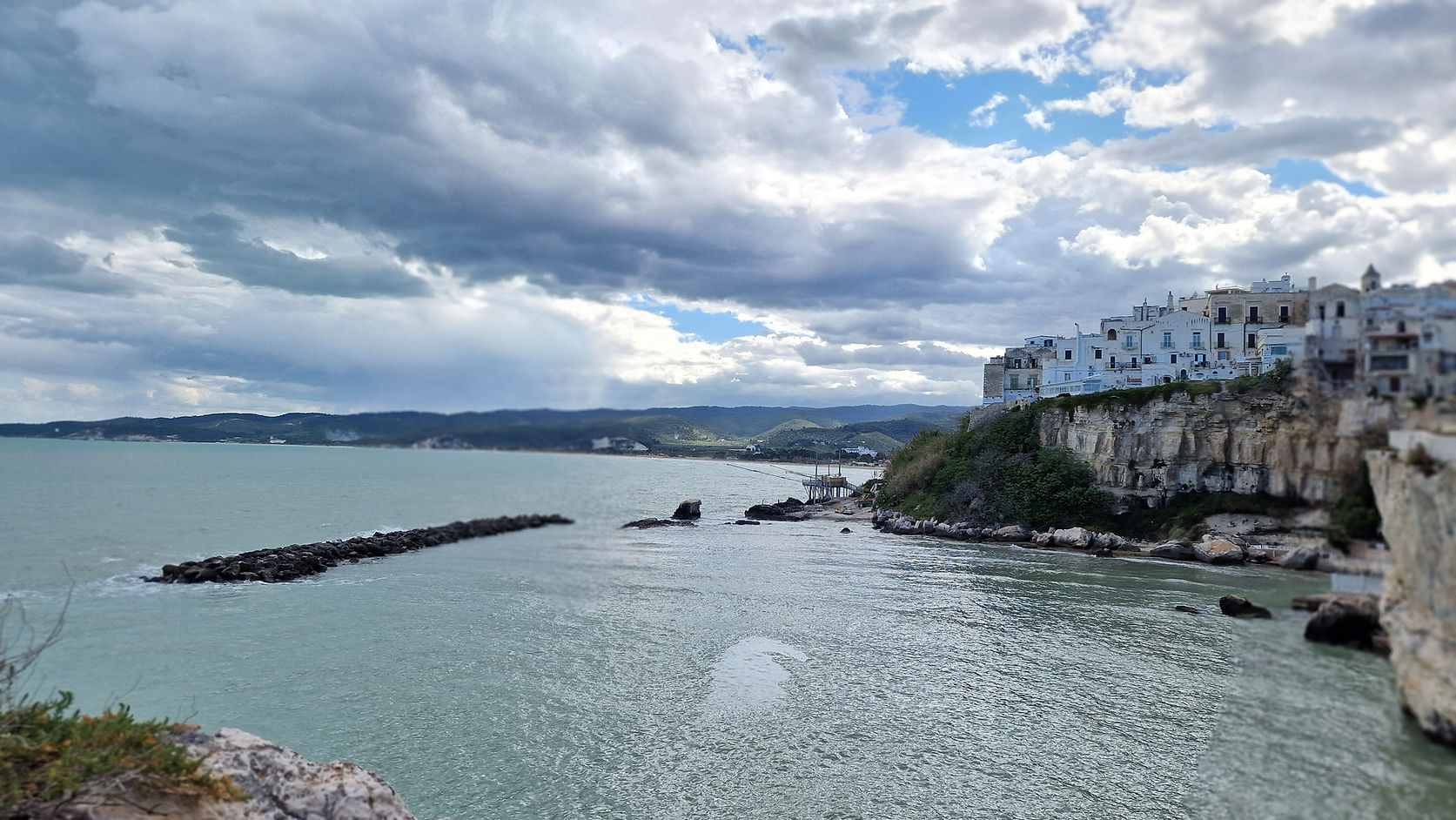
Perched dramatically on white limestone cliffs above the Adriatic Sea, Peschici is one of the most iconic medieval villages of the Gargano Peninsula. Its historic center is a maze of narrow alleys, whitewashed houses, small squares, and panoramic terraces overlooking turquoise waters.
The village preserves a strong local identity, shaped by centuries of maritime life, fishing traditions, and southern Italian culture. Below the old town stretch sandy beaches and hidden coves, easily accessible and ideal for relaxation after a day of exploration.
For Erasmus+ participants, Peschici offers a perfect blend of history, sea, and authentic village life—an inspiring place to experience Italy beyond the usual tourist routes.
Trabucchi di Gargano
Wooden fishing
machines
The trabucchi are iconic wooden fishing structures unique to the Gargano coastline. Built on stilts and extending over the sea, these ancient machines were traditionally used by local fishermen to catch fish without going out to sea. Today, they stand as powerful symbols of coastal heritage, ingenuity, and sustainable living. Some restored trabucchi can be visited or even experienced as cultural and gastronomic landmarks, offering a deep connection to Gargano’s maritime history.


Lago di Varano
The largest coastal lake of Southern Italy
Lago di Varano is the largest coastal lake in Southern Italy, located on the northern side of the Gargano Peninsula. Separated from the Adriatic Sea by a narrow strip of land, the lake creates a unique landscape where freshwater and marine ecosystems meet.
The area is known for its rich biodiversity, traditional fishing culture, and calm, natural atmosphere. Local fishermen still use age-old methods, and the lake is famous for eels and other freshwater fish that are part of Gargano’s culinary heritage.
Surrounded by wetlands, small villages, and open skies, Lago di Varano offers a peaceful contrast to the coastal towns. It is an ideal place for nature observation, slow walks, photography, and understanding the authentic rural side of Gargano.
For Erasmus+ participants, Lago di Varano represents another facet of the region: quiet, ecological, and deeply connected to traditional ways of living.